Resources / Life cycle
From first prototype to last spare
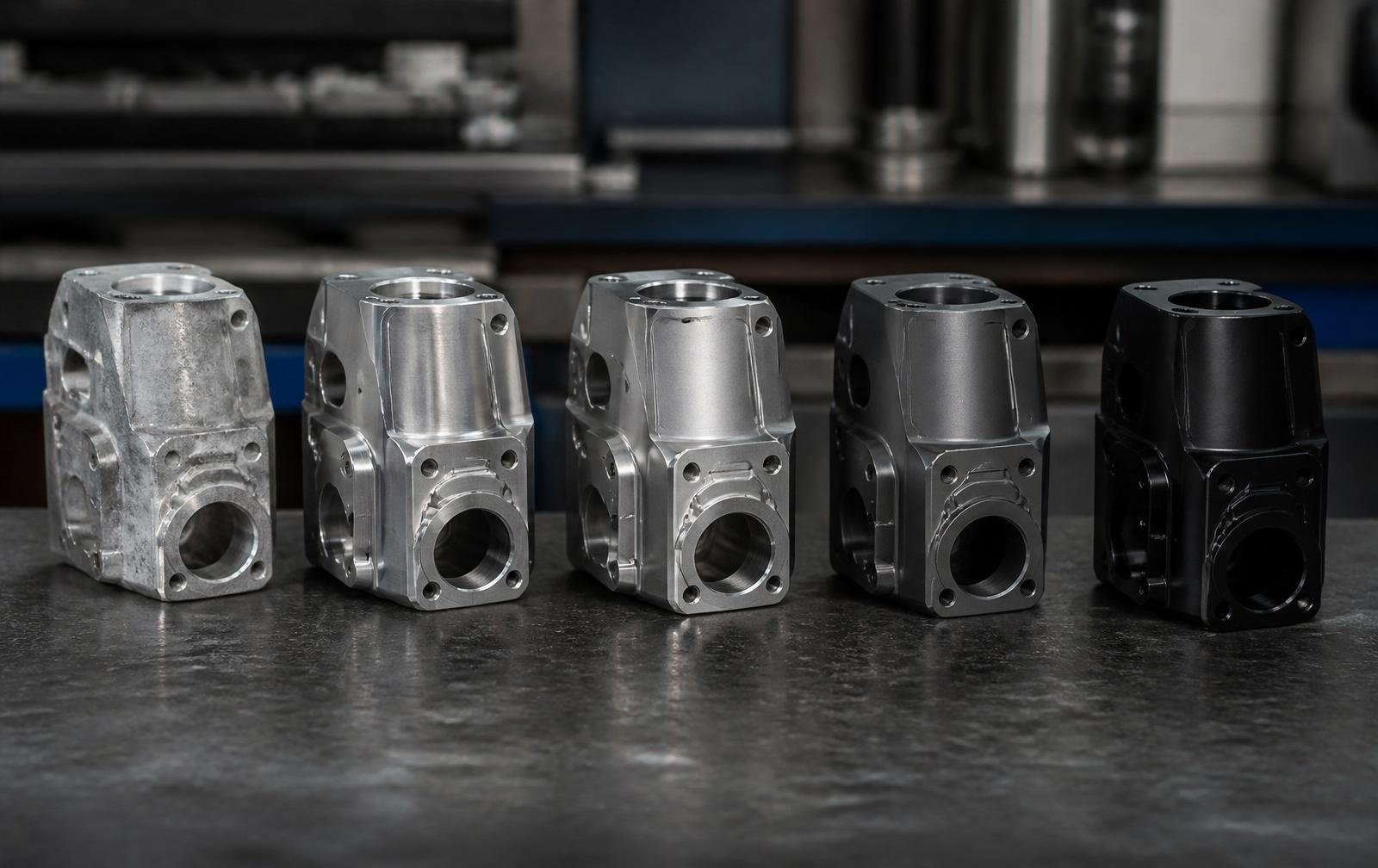
The right process changes as a part matures. Keeping machining and casting in one place makes those transitions cheap.
Six stages
Prototype
1 – 25 parts
Machined from solid in the production alloy so testing reflects reality. No tooling cost, days not weeks.
Validation
25 – 250 parts
Machined bridge parts while the design freezes. Fixtures built and process documented.
Tooling
Die design & cut
Die designed around the frozen model, cut in-house, sampled and corrected before release.
Production
250 – 100,000+
Scheduled casting and machining with inspection records against each batch.
Sustaining
Ongoing
Tool maintenance, cost reduction reviews and buffer stock for demand spikes.
End of life
Spares
Reverse engineering and short machined runs long after the tool has been retired.
Crossover
When to stop machining and cut a tool
01
Volume
Annual quantity high enough to amortise the die within a year.
02
Stability
Geometry frozen — late changes are expensive in hardened steel.
03
Geometry
The part suits casting: uniform walls, draft, no deep undercuts.
04
Lead time
You can absorb tooling lead time, or bridge it with machining.
Talk it through
We will tell you honestly when a tool is not worth cutting yet. A supplier that makes both machined and cast parts has no reason to push you toward the wrong one.
Ready to start your project?
Send your CAD file, drawing or sample part — an engineer reviews every enquiry and replies with material, tolerance and lead-time options.